
Windsor Resident Lookup Coverage
No single Windsor roll identifies every household member. Property cards name owners and mailing addressees, voter files concern registered voters, and court, probate, vital, business, and license records answer narrower questions. A careful resident lookup labels what each source truly confirms.
| Official record | Useful confirmation | Windsor keeper | Public route |
|---|---|---|---|
| Property card and GIS | Owner, parcel, situs and mailing fields | Windsor Assessor | Free address or file-code search |
| Voter registration | Registration status and district for an allowed match | Windsor registrars and SOTS | Official individual lookup |
| Land index | Parties, instrument, date, book and page | Windsor Town Clerk | SearchIQS and office books |
| Court and probate | Party, docket, case type and public disposition | Judicial Branch and Greater Windsor Probate | Free index; copies may cost |
| Vital records | Birth, marriage or death event | Town Clerk or Connecticut DPH | Index or eligible copy request |
| Business and licenses | Entity role, trade name, credential and status | SOTS, Town Clerk and eLicense | Free lookup |
Begin with the source closest to the known fact. Put an address into Windsor Property Cards. Try a legal name in court, probate, land, business, or license indexes. The assessor has no owner-wide name field. An old address belongs in the Windsor past-resident trail.
Each row has a different clock. Property ownership can change after a sale, a voter can move or become inactive, and a business can dissolve while its filing remains searchable. Court and probate entries preserve case events rather than a live directory. Write the record date beside every finding. If the date is absent from an index screen, open the detail or ask its Windsor or Connecticut custodian before using the match.
Refine a Windsor Name Lookup
Search the surname with the full first name, initials, suffixes, former surnames, and likely spelling variants. Deeds may list an estate or trust. Business files can use a legal entity, trade name, or ALEI identifier. Keep every version separate until another field joins them.
Dates prevent the same-name trap. Compare town, middle initial, address type, filing date, birth year when displayed, and a stable case or document number. If sources disagree, preserve both values and report the latest verified date. Never turn an old mailing address into a claim of current residence.
SearchIQS adds another name problem: the Town Clerk's land records can index a person as grantor, the transferring party, or grantee, the receiving party. Search both roles and try blank or broad date windows when the likely year is uncertain. A deed's book and page provide a better join than a spelling alone. Recent recordings may also await audit, while older materials can require the INDEXBOOKS route or an office search.
Evidence rule. A shared name is not identity proof. Require another matching field before connecting a Windsor record to one person.
Check Windsor Court Records
Windsor is served by the Hartford Judicial District. The Criminal and Motor Vehicle docket search supports defendant, court, case-type, and date-range paths. Results can show docket number, court activity, hearing details, defendant name, and birth year. A docket is the court's numbered case record, not proof of present residence. Sealed and erased matters do not appear as ordinary results.
Review the official docket form before selecting a Windsor match.
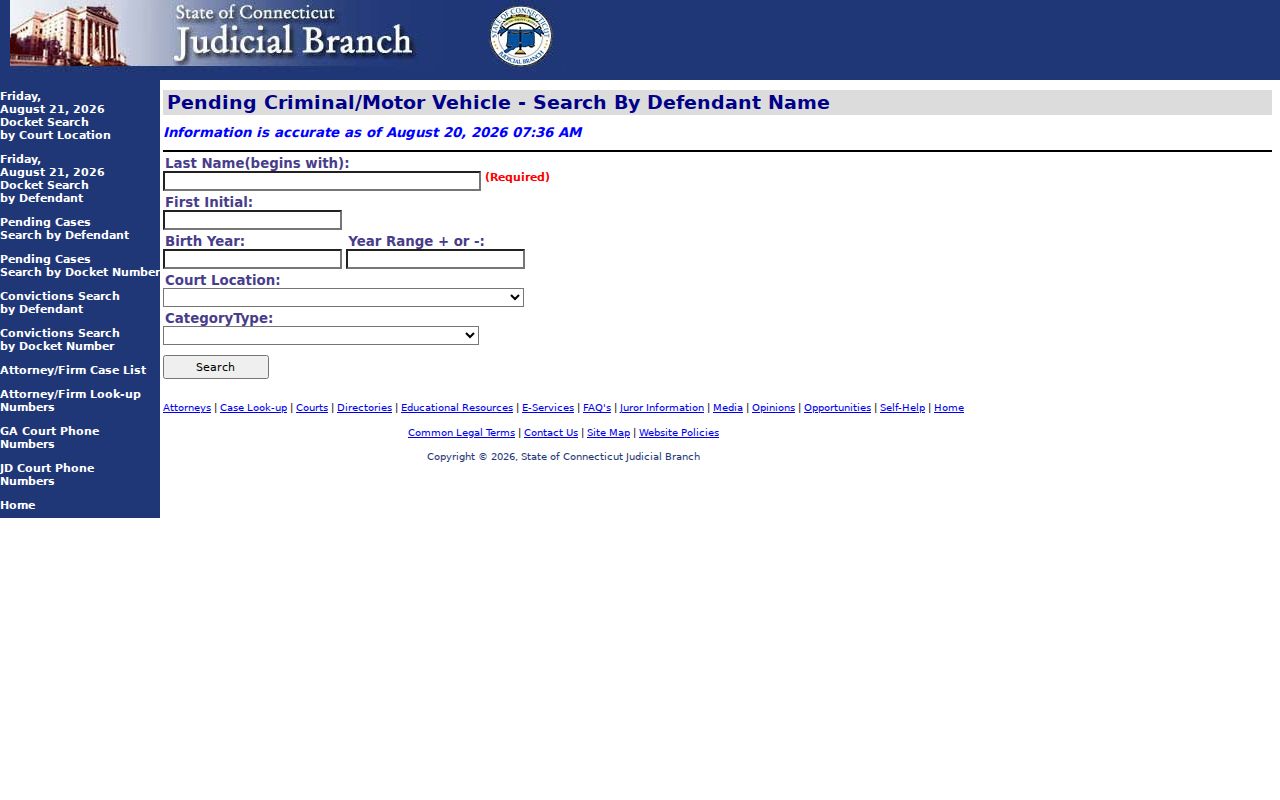
The court and date controls help separate people who share a name.
A disposition search answers a different question. Open Connecticut's convictions search and retain its case identifier and date.
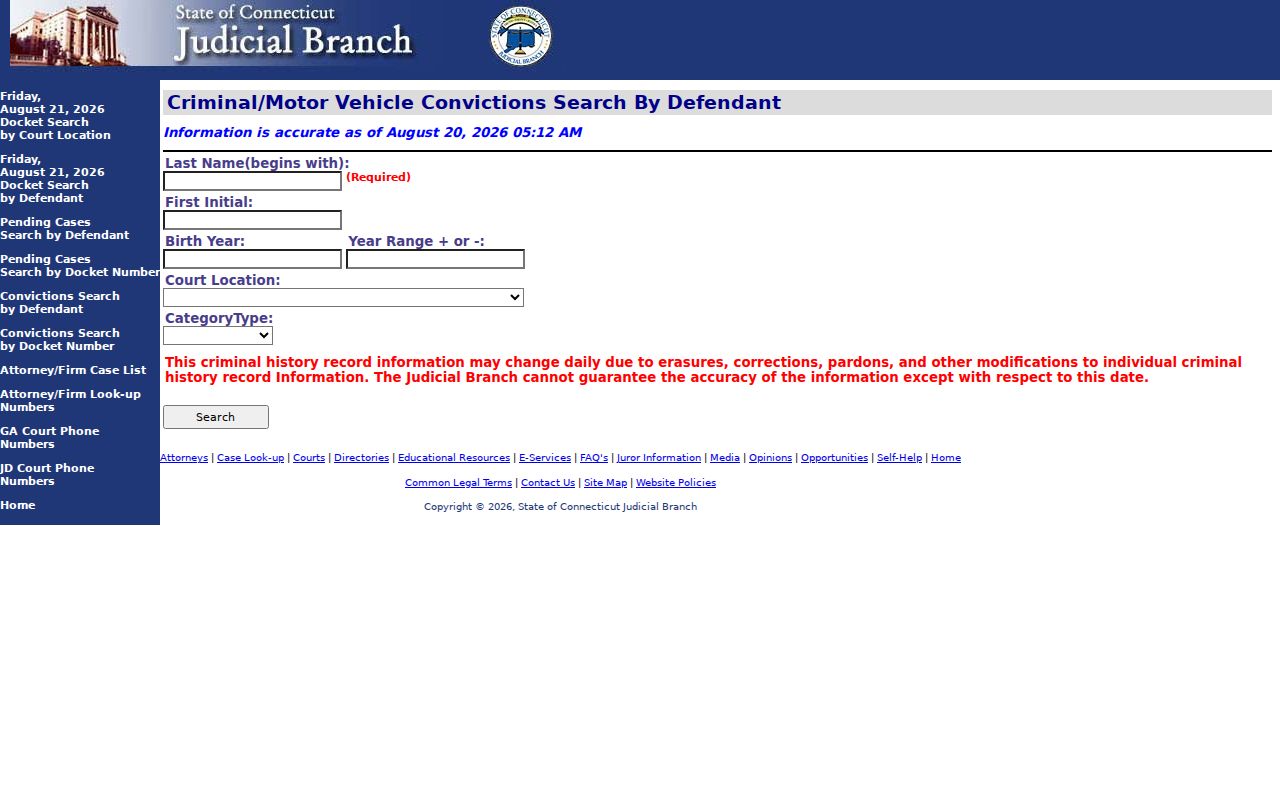
Describe the result as a dated court record, never a complete resident profile.
When the court index gives a promising result, copy the docket number exactly and inspect the public event list. Do not infer the charge, outcome, or identity from a name-only hit. The Hartford court directory supplies the proper courthouse and public-information contact for Windsor matters. Federal cases use PACER or the District of Connecticut instead, so a missing state result does not support a claim that no other public proceeding exists.
Confirm Windsor Civil and Probate Clues
The civil case inquiry offers party, docket, attorney, property-address, calendar, and foreclosure routes. An address may be for service, a property in dispute, or current only on the filing date. Read the docket context before linking it to a person.
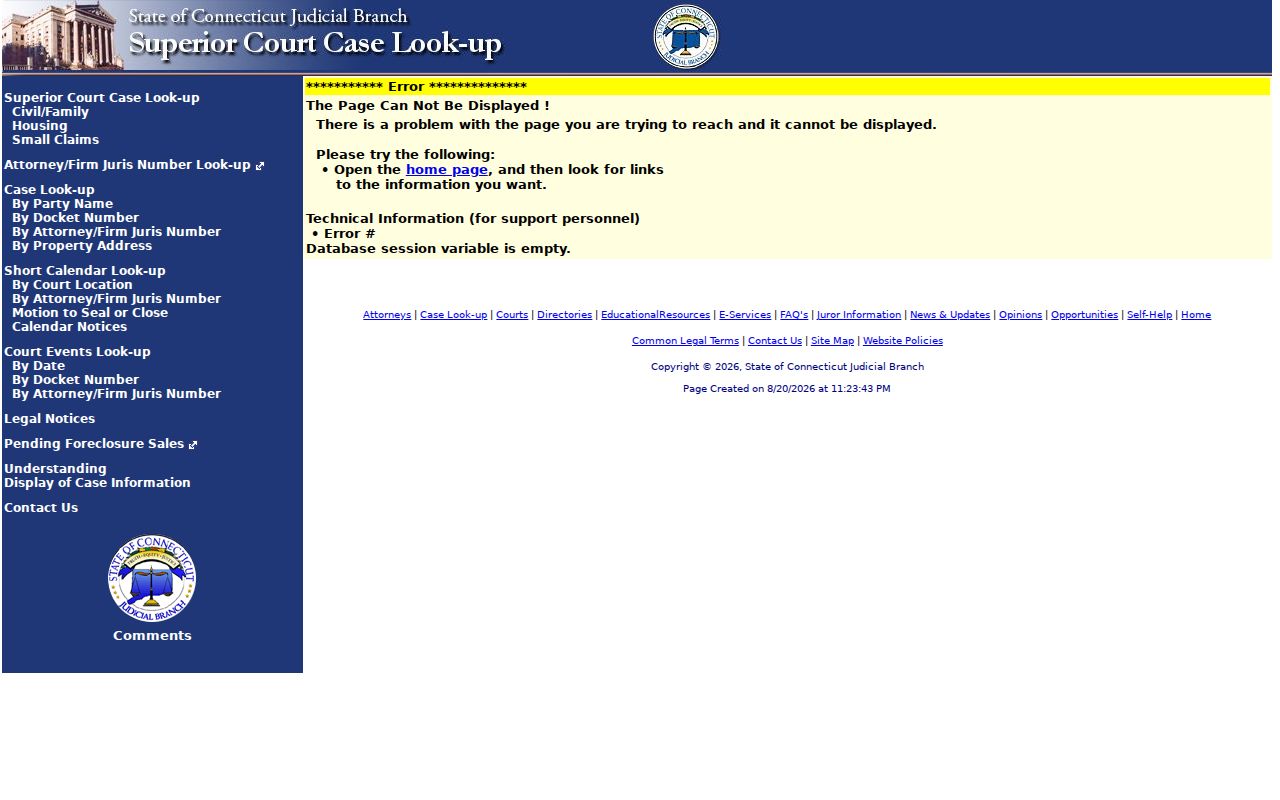
The menu keeps a party-name search distinct from a property-address search.
Probate can connect a decedent, fiduciary, heir, or estate to a dated case. Search the Connecticut Probate case lookup by district, case type, and status, then ask Greater Windsor Probate for an allowed file if needed.
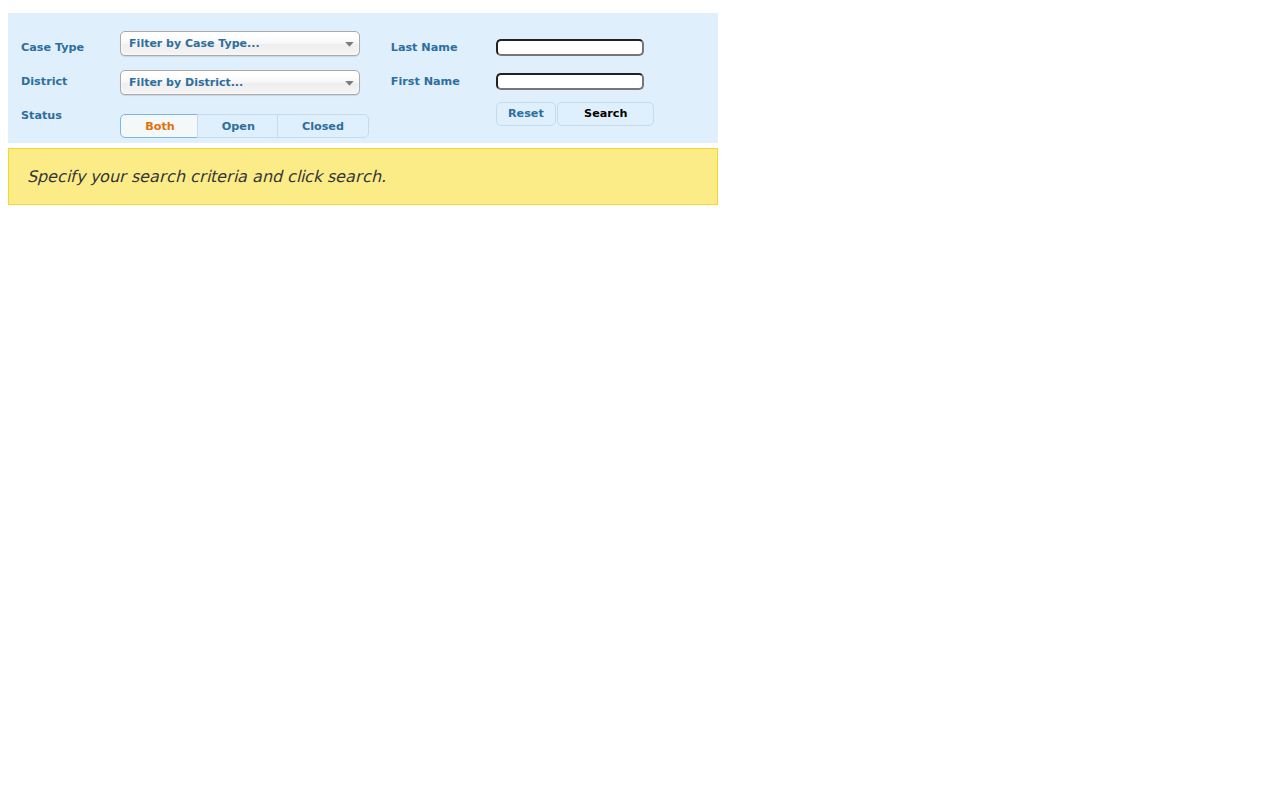
Probate evidence suits heir and family research, but private filings remain restricted.
A probate address may belong to the decedent, a fiduciary, counsel, an heir, or an estate asset. Label the role that appears in the file. For estate research, pair the case with an obituary, a death record available under Connecticut rules, and a deed recorded after distribution. Those independent dates can explain a transfer without pretending that every named heir lived at the Windsor property.
Verify Windsor Voter Status
Windsor's registrars maintain the local roll in Connecticut's central system. Use the official MyVote lookup for an individual result. The form resisted unattended inspection, so its current fields should not be guessed. Registration answers a civic-record question, not who occupies every room at an address. Protected voters may be withheld.
Windsor's June 2026 budget referendum minutes reported 20,344 registered voters, 3,834 votes, and 19 percent turnout across seven districts. Those aggregate totals do not confirm whether one person voted or still lives at a home. Connecticut's 2026 TotalVote and GIS upgrade also means an old screen may not match the live system.
The public lookup is not a downloadable block roster. Windsor's registrars also handle registration, election calendars, and district questions at the local level. When an individual lookup fails because of spelling, status, or security controls, contact the registrar about the official process rather than using an unofficial compilation. Connecticut protects some voter addresses, and the absence of a public result can never justify searching for a confidential substitute address.
Note: Keep the search date because registration status and voting districts can change.
Confirm Windsor Vital Events
The Windsor Town Clerk and State Vital Records Office handle local and statewide requests. Birth certificates are generally closed for 100 years under CGS §7-51 and available only to eligible applicants, with stated exceptions. Marriage and death access is broader, but restricted records and Social Security numbers stay protected. Town certified copies are generally $20; state charges vary.
Read Connecticut's birth-certificate rules before sending identification or payment.
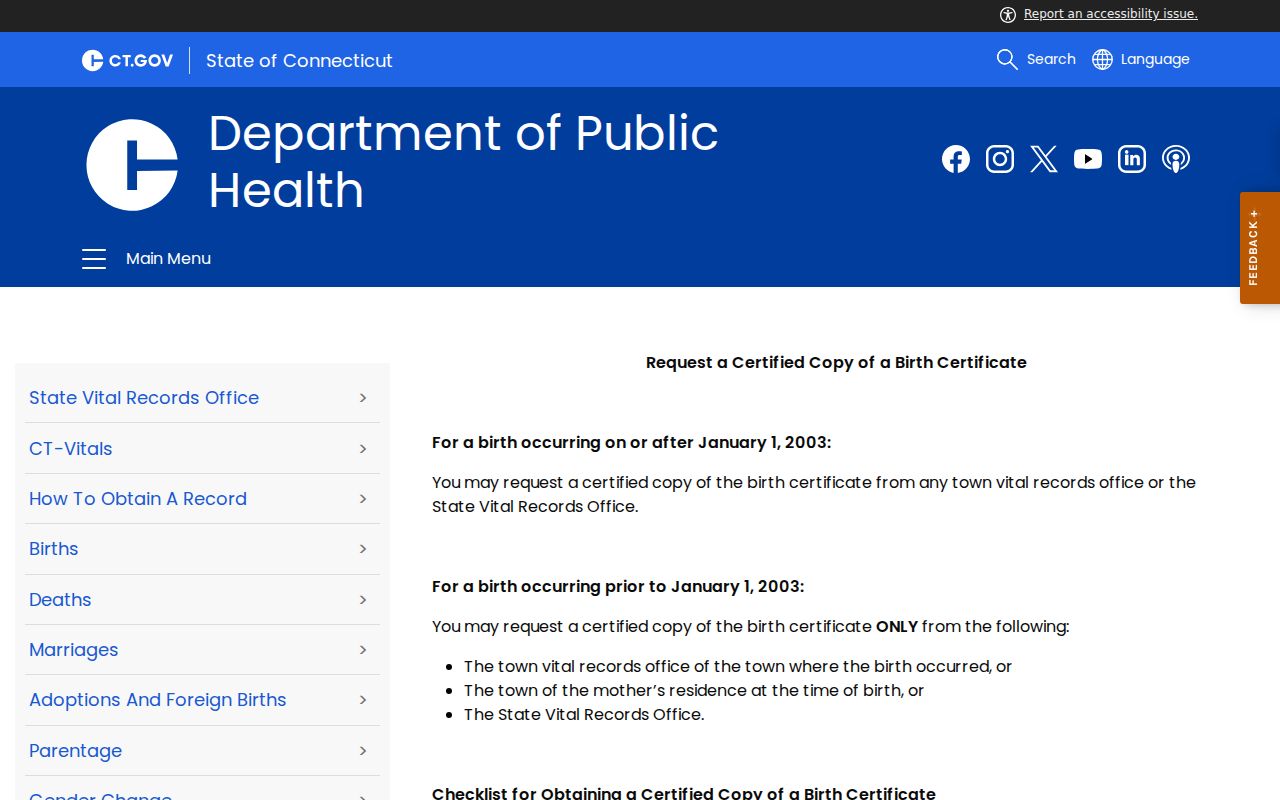
The official page separates eligible-copy and genealogy access from an unrestricted name search.
An index points to an event; a certified copy is authenticated by the custodian. Use the official applications or contact the Town Clerk at 275 Broad Street. Adoption files carry added limits. No complete intermediary workflow was verified, so an online birth-parent search should not be promised.
Choose town or state service based on the event and the requested document, not convenience alone. Follow the official identification, eligibility, mail, and in-person instructions. Genealogical society access and identifiable research-data requests have their own rules. A name in a secondary family tree may help find a date, but only the registrar can issue a certified certificate or explain why a protected record cannot be released.
Match Windsor Business and Licenses
Business.CT.gov accepts an entity name, ALEI or business ID, and filing number. Results may show legal name, agent, principal address, formation date, entity type, and filing PDFs. Older files may not be online. Windsor trade names are held by the Town Clerk, while the statewide transition remains incomplete until 2030.
The Connecticut eLicense lookup adds license type, number, status, business or DBA name, personal name, address, city, state, ZIP, and country across more than 800 credential types.
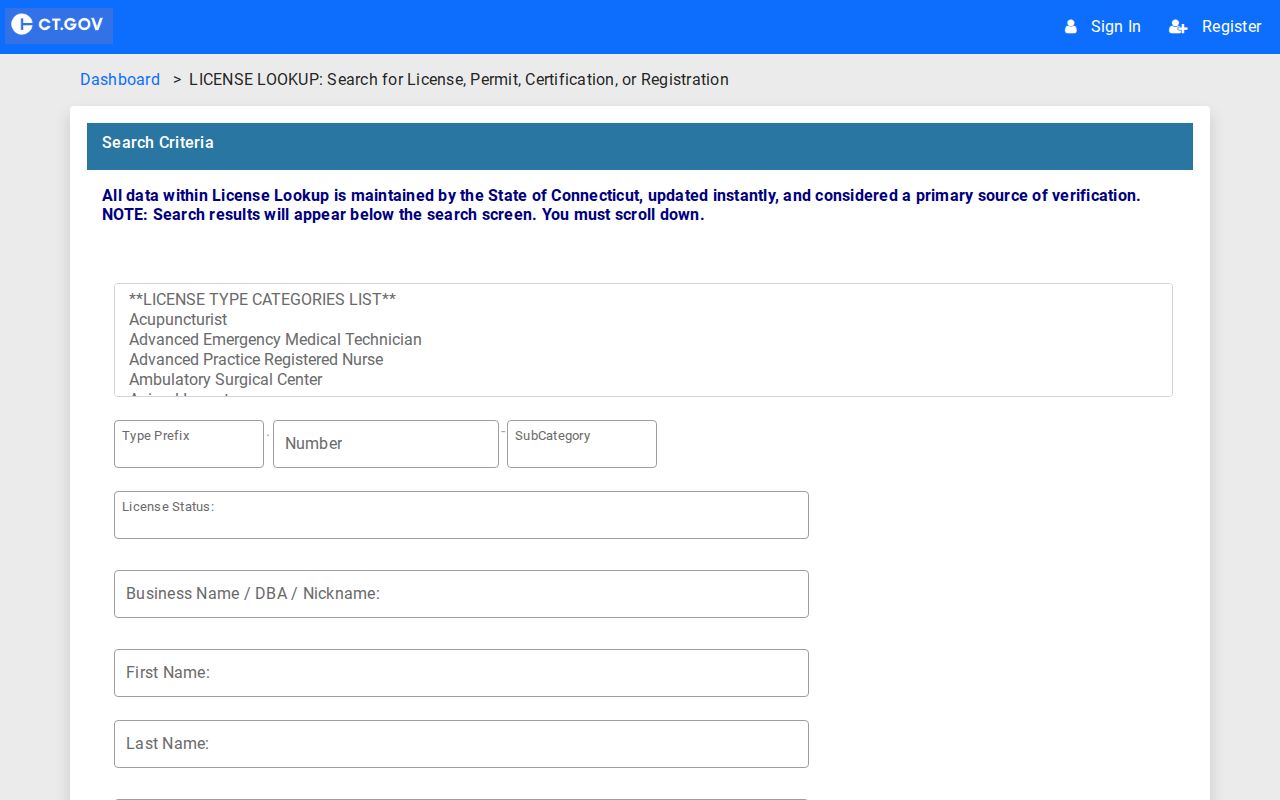
The search can verify a dated credential or affiliation. A business, agent, or license address is not proof of a person's home.
Read status and filing history together. A current license can confirm a public credential, while an inactive record still documents an earlier association. A principal address, registered-agent address, trade-name business address, and personal residence are distinct fields. Windsor trade names filed from January 2025 use new forms; older local filings remain valid through the transition period described by the Town Clerk.
Verify Windsor Resident Records
Build an evidence ledger with source, record date, address type, printed name, identifier, and access limit. This exposes stale filings and stops a mailing address from being mislabeled as a home.
- Write the name exactly as known, then add initials, suffixes, former names, and a date range.
- Anchor it to one dated official source, such as a voter match, deed party, or known-address property card.
- Run a second index. Compare dates, middle names, birth year when public, district, or record number.
- Open the details and request a certified document from the correct custodian only when needed.
- Report the precise fact: recorded owner, voter match, court party, vital event, or credential holder.
- Docket
- The court's numbered case record and public event list.
- Index vs image
- An index is a finding aid; an image reproduces the filed document.
- Certified copy
- An official reproduction authenticated by its custodian.
For a former classmate or relative, official records may be only part of the answer. Windsor Library genealogy holdings, yearbooks, Historical Society family files, obituaries, and the reconstructed 1890 census can establish historical association. Treat those as dated sources, then use probate or vital records only within their access rules. The Windsor city directory collections own the historical shelf and explain how old entries should be read.
Resolve Windsor Lookup Conflicts
A resident lookup often ends with two records that seem to disagree. First classify each address. The Windsor assessor may show the parcel situs and a tax-mail destination. A business record may show a principal or agent office. A civil filing may use an address for service. A voter match, when available, concerns registration. None is automatically wrong merely because the text differs. Put each value in its own evidence-ledger row, keep the printed spelling, and mark the date on which that office recorded it.
Next, return to the originating custodian. The Windsor Assessor can explain a property-card field, while the Town Clerk handles recorded land instruments, local vital certificates, and trade names. Windsor's registrars answer voter-record process questions. The Judicial Branch or Greater Windsor Probate clerk handles its own case files. Connecticut DPH manages statewide vital-copy routes. A correction request should name the exact record and disputed field and include suitable evidence. An FOI request asks for access; it is not an order to edit data.
Online coverage also has edges. Windsor says land indexes reach to 1640, but the ordinary SearchIQS data table separates an index beginning in 1970, images from June 26, 1971, maps from 1881, trade names from 2006, and foreclosure registrations from 2011. Older INDEXBOOKS and an in-office search fill parts of that gap. The newest recording may not yet have completed the Town Clerk's audit. State business files older than 15 years may be absent online. A failed web search can therefore mean coverage limits, not that no record exists.
Use the Connecticut FOI route only after identifying the keeper and a narrow existing record. The state's FAQ says there is no universal request form. Describe a person or entity name, record category, date span, known number, and preferred electronic or paper format. Ask about an estimate if copies may cost. The office may redact exempt details or explain another custodian. Keep that response with the research notes because it documents both the access channel and the boundary of the result.
Finally, phrase the conclusion to match the evidence. “Recorded owner as of the card date,” “party named on docket,” “registered-voter match checked on this date,” and “license shown active on the search date” are supportable statements. “Lives there now” is not supportable when the only source is a mailing field, old case, business address, or historic directory. That restraint makes a Windsor resident lookup more useful for reconnecting, genealogy, estate questions, and scam verification while respecting people whose current location is not public.
Windsor Resident Lookup Limits
Connecticut closes or redacts many personal details. Safe at Home supplies qualifying participants a substitute address under CGS §§54-240 et seq. A voter privacy program under CGS §9-50(d) can withhold a participant's name and address. DMV data, juvenile matters, erased cases, protected victim information, and Social Security numbers carry other limits. Never reverse-engineer a protected address.
For an existing public record not online, send a narrow request under the Connecticut Freedom of Information Act. State the record type, name, date range, and format. FOI grants access to existing nonexempt records. It does not force an office to create a resident list or correct another database.
Lawful use. Use a Windsor resident lookup for legitimate personal research. Connecticut law does not permit stalking, harassment, intimidation, or exposure of protected addresses.
Commercial people-finder data can merge names and recycle old addresses. Treat that category only as a lead. Verify each claim with the official keeper, and send corrections to the office that created the disputed record.
Connecticut's Data Privacy Act gives covered consumers rights involving access, correction, deletion, portability, disclosure, and certain opt-outs, but it does not erase lawful public records held by Windsor. A private-controller request, a custodian correction, and a Safe at Home protection are three different processes. Identify which system published the disputed data and request only the remedy that system can provide.